Interview: Danièla Dufour, The Female Watchmaker
To celebrate International Women’s Day, I spotlight a breakthrough talent who is making waves in a male-dominated, aristocratic industry: fine watchmaking.

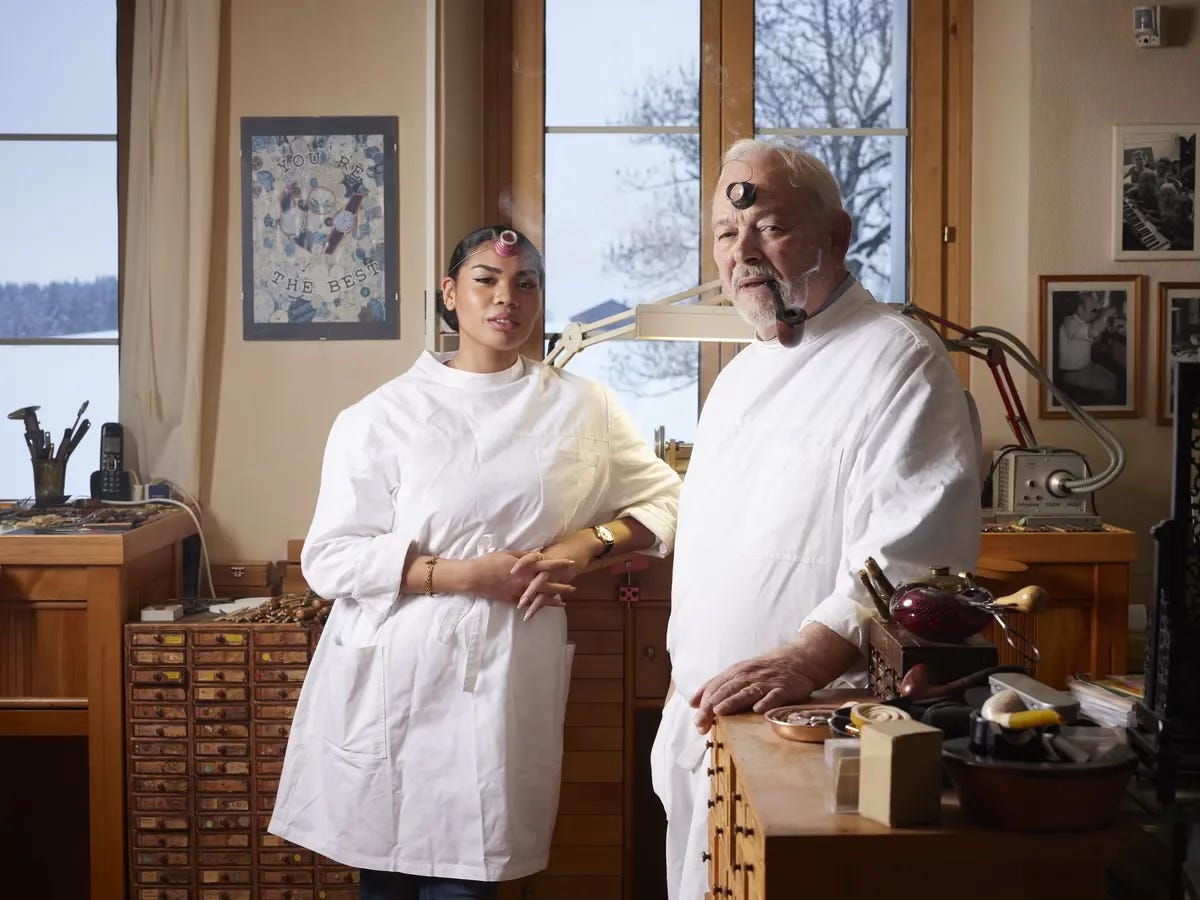
Danièla Dufour is the daughter of watchmaker Philippe Dufour, who is considered by many to be the greatest living watchmaker. At just 24 years old, she symbolizes ‘next-generation’ haute horology. Her path has not been easy. And her story is entirely singular. But, as she evolves into a master watchmaker in her own right, she is poised to become an icon.
Did you know? Historically, the title of "master watchmaker" in Switzerland was largely restricted to men during the 18th and 19th centuries. Entry into the guild system—a requirement for becoming a recognized "master"—was typically limited to men. Even as women became a significant part of the watchmaking workforce by the late 19th century, they were often relegated to lower-paid and less prestigious tasks (such as painting). The path to formal recognition in the field remained overwhelmingly male-dominated until much later. In 1952, Mrs. Gschwind-Wiedenmann became the first female master watchmaker in Switzerland.
Today, Danièla is making a name for herself. Her journey began at the age of 15 when she started apprenticing under her father's guidance. By age 20, she had completed her first timepiece, the Simplicity watch, in 2021. It is one of the rarest and most coveted watches in the world, unique to – and created by – her.
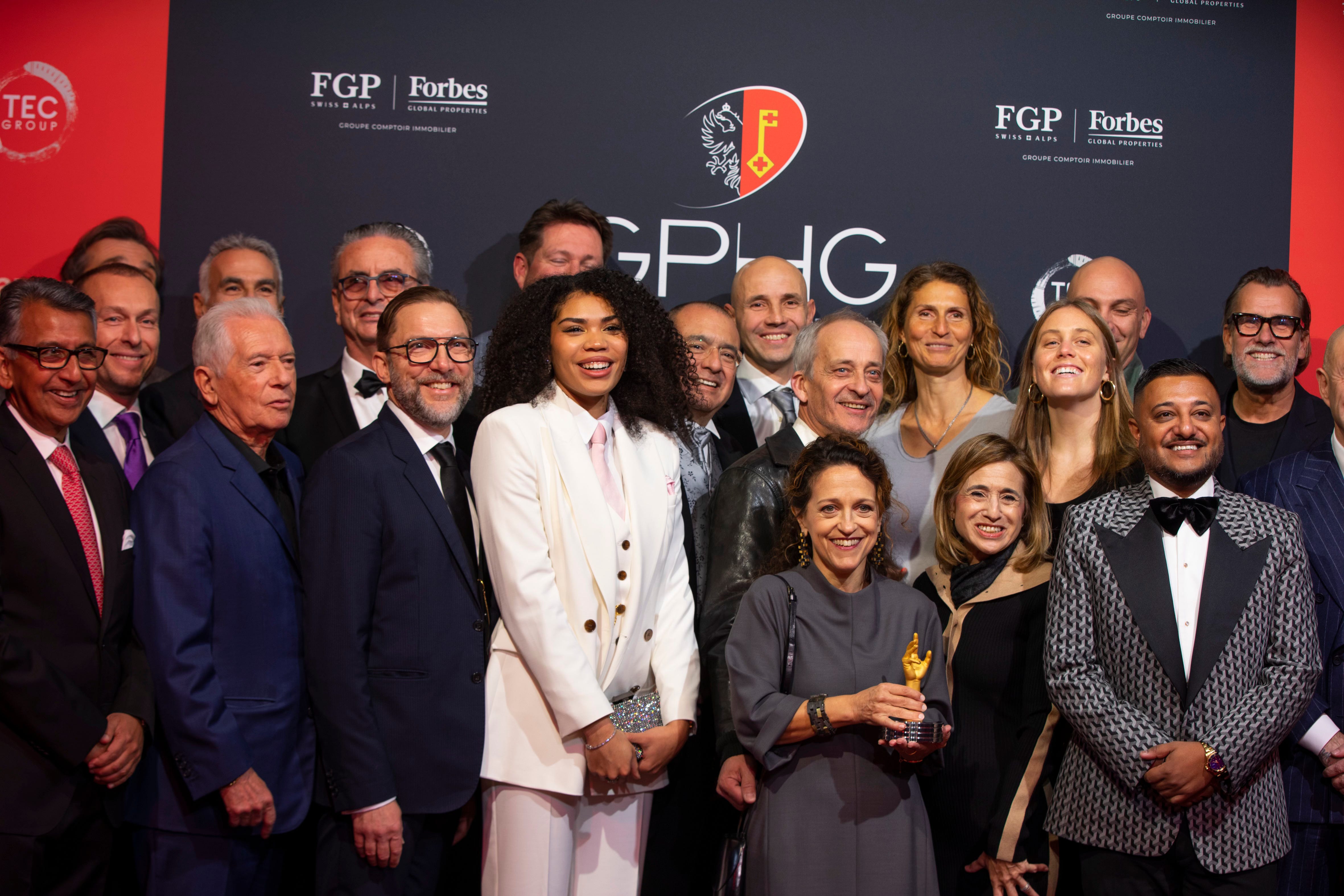
I met Danièla at the Grand Prix d’Horlogerie de Genève (2024), a.k.a. the Oscars of Watchmaking, as her father served on the jury. She was kind enough to speak with me late-night, after all the awards had been given out and all the Tattinger flutes emptied. Her poise, even at 24 years of age, is remarkable.
In Conversation With Danièla Dufour


It's such a pleasure to meet you. (It’s late, so let’s dive right in!) Your father's workshop is north of Geneva?
DD: It’s about an hour and a half from Geneva.
Are you working there?
I'm working with my father, yes. It's been three years officially that I'm working with him. As well as during my apprenticeship at his workshop.
Were you working there on the Simplicity watch?
Yes, of course. I have on my wrist my first Simplicity that I manufactured during my apprenticeship. I finished it just before receiving my final certificate.
At the École?
The École Technique de la Vallée de Joux (ETVJ) [is a watchmaking and microtechnology school in Le Sentier, Switzerland].
And how many years did you study there?
I studied for five years.
Is that the normal time?
Normally it's four years. And I wanted to do six years, four years of watchmaking and two years to learn how to draw or ‘concept’ your watches on a computer. You learn to use a program. But unfortunately for them, not for me, I was the youngest one. I was mixed race. I was ‘the daughter of’... And it wasn't easy, because I experienced sexism and racism by my professors, and by my classmates. Not all of them, thankfully. But it was a kind of complicated time. So unfortunately, I had to do five years. And after I said, okay, stop. No more.
I ended up with my certificate, because I had learned the basics, and I started to work with my father. And it was the best time I ever had, because I was not just a name, or a number on a paper. I was considered someone with emotions and opinions that I could exchange with my father, and learn directly from him. I felt respected. So that was really the beginning of my watchmaking career.
Talk to me about this idea of succession. Do you see your future as somebody who's going to take the brand as CEO?
I'm part of the Dufour brand. I don't think that I will take part as a CEO. My father is going to work until his last breath, which is very nice because he loves what he does. For him, it's not a profession, it’s a passion. The pleasure of waking up every day and going to the workshop. A day without going to the workshop, for him, is a bad day.
Working on what he likes keeps him young. And that's really important. So I thank God every day, because I will work with my father for many years, and I think it will be the most beautiful thing. We're not really talking about succession. We're talking more about collaboration, as a family; My mother [Elisabeth Dufour], him and I—we work as a team.
Your mother?
She's taking care of the communication and marketing.
Where is your mother from?
My mother is from Cameroon.
I’m curious how you find your own identity within this context.
I got curious about watchmaking when I saw my father spending way too much time at his workshop. And he kind of [gave me the bug]. But he never imposed his ideas, his opinions, or his tastes. He didn't want me to become a replica of him. So I grew having [guidance] and understanding how mechanisms work. But I’ve always been neutral in terms of design, in terms of colors, in terms of conception. He might have strong opinions and ideas, which are sometimes impactful. But I grew up having my own identity. I choose what I like, and what I appreciate less.
But I will always recognize the work and appreciate the designer. So, for example, I can love Rolex. I can love Swatch. I will certainly love Bulgari, Tissot, Longines. I can love so many different watches. Because mostly what is magnetic about the watch is the story that she's telling you, and I'm saying she, because in French we say she. We think about the watch as a transmission of a part of the soul of the person manufacturing it, as an emotion, a story. This is something you create that is going to remain eternal. It will exist after you, as a trace that you leave in time on Earth. So we really personify a watch.
How exposed are you to the business side of things?
We're not really involved in the money side. But I might say that our timepieces are more expensive [they auction for multi-millions] than 30 years ago. What people might forget is the fact that my father has been watchmaking for 57 years, and it’s been more than three decades that he’s manufactured his own watches. He had to wait that long to have his work recognized. [Of course] you have to follow the market. You have to follow the auctions. You can’t manufacture a watch for free. But, you can fully focus on your craft at your bench when you're manufacturing.
Who handles the business side for you guys?
Us three.
You don’t work with an agency?
No, we don't. Because we have rare watches, and very little production. So there's no need.
The history of watchmaking is heavy for women who were never allowed to be master watchmakers. Do you think there is a future for women in your industry?
There's definitely a future for women in this industry. When I arrived in watchmaking, and still today, it is a man’s industry. I think it will remain as a man’s industry no matter what, but there is room for women. We don't have to push people to the side. No. We have room. It’s just that the woman needs to have enough determination to start.Now, I see more and more women coming into watchmaking. And it’s a big world. You can be an enameler, you can be a casemaker. You can manufacture the straps. You can be a jeweler. There are so many crafts, so many professions related to watchmaking. In fact, being a complete watchmaker at the bench manufacturing watches, graduating from a school, etc. If you want to do it, then do it. Because you can. You just need to work hard. You need determination. And also self trust.
Do you see yourself as an icon of equality or feminism in watchmaking?
[DD laughs]. I don't see myself that way. I don't consider myself an icon. I just see myself as Daniela Dufour doing what she has to do. Maybe I can inspire people, but this is not my first goal. Because, if I talk honestly—in watchmaking, I had no model. I see no one having the journey that I had. No one is going through what I have to go through. And I believe in God, and I always say that you cannot become someone important if you don't pass through difficult times. I will certainly be someone important, but I will never consider myself an “icon.” Maybe if I have 57 years of watchmaking like my father, I will consider myself as a celebrity, I don't know! I keep my feet on the ground. I have to do what I do best, which is work at my bench and create magnificent timepieces.
I think that I'm someone important, without being presumptuous. I think that I proved to myself that I was capable of handling the name, the legacy, the tougher transition. But I still have a lot to learn. I will never say that I'm the best, because there's always someone better than you. In design, in conception, in anything.
But women don’t need a model in watchmaking. I hope they become their own model. That they experience, that they make mistakes, they learn from their mistakes, and in the future it will be a good thing.